
• Door naar de hoofd inhoud
  • Skip to secondary menu
  • Spring naar de eerste sidebar
  • Spring naar de voettekst
Neerlandistiek. Online tijdschrift voor taal- en letterkunde

Neerlandistiek

Online tijdschrift voor taal- en letterkundig onderzoek

  • Over Neerlandistiek
  • Contact
  • Homepage
  • Categorie
    • Neerlandistiek voor de klas
    • Vertelcultuur
    • Naamkunde
  • E-books
  • Neerlandistische weblogs
  • Archief
    • 10 jaar taalcanon
    • 100 jaar Willem Frederik Hermans
  • Jong Neerlandistiek
  • Frisistyk
  • Mondiaal

Call for papers: Food and Taste in Travel Writing: Comparative Representations in Post-Colonial Literary and Visual Culture

20 september 2023 door Redactie Neerlandistiek Reageer

Deadline for abstract submissions: November 1, 2023
Deadline for full article: July 1, 2024
Name of organisation: Dutch Centre for Travel Writing Studies, Leiden University Centre for the Arts in Society (LUCAS)
Contact email: a.s.arps@uva.nl

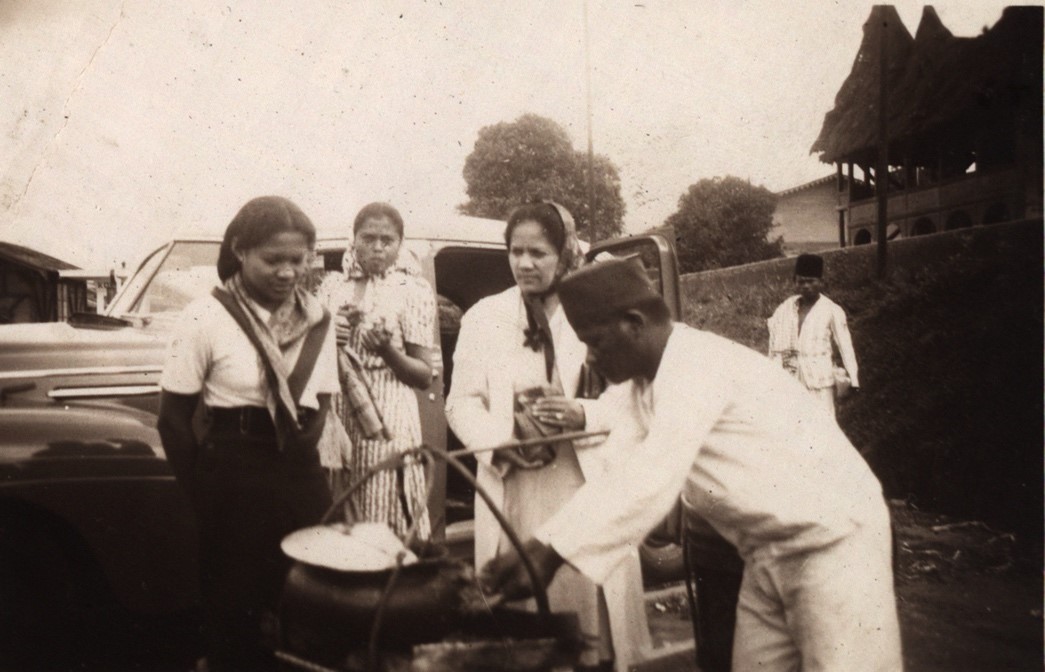
Food, travel, and colonialism are inextricably intertwined in representations, both past and present, of colonies such as the Dutch East Indies. Food has been represented differently in colonial and post-colonial times and its function has varied. In the context of the Dutch East Indies, food has previously been analysed as a means to regulate what it meant to be European in the colony (Protschky 2008), as a sign of civilization in internment camps (Captain 2009), and as an important identity marker in boarding houses after the so-called ‘repatriation’ (Arps 2022).

Despite its consistent reappearance in travelogues, encompassing studies of travel writing have never taken ‘food’ as sole object of study. Recent edited volumes include it indirectly (Das and Youngs 2019) or as vehicle for sensous geographies such as tasting (Youngs and Pettinger 2019). Although in these works food is present, it is not central. In Keywords in Travel Writing Studies: A Critical Glossary (Forsdick, Kinsley, and Walchester 2019), one hundred keywords are included that are to define the field of travel writing, yet ‘food’ is not one of them. In food studies, the relation between food and travel has been studied more elaborately. Studying the relation between food and travel teaches us the underlying political, social, and cultural relevance of food, argues Fabio Parasecoli (2008). The relation between food and travel can inform us on how it mediates comparison, empathy and expression (Tam and Frost 2008). This volume connects the interdisciplinary perspectives that culinary travelogues on the Dutch East Indies and other former colonies offer in the fields of Literary Studies, Postcolonial Studies, Dutch Studies, Travel Writing Studies, Film Studies, Media Studies, Food Studies, and Memory Studies. Following the inaugural volume Animals in Dutch Travel Writing, 1800-Present (Leiden University Press, 2023), this second volume of the Dutch Centre for Travel Writing Studies invites scholars to think of possible answers to the question: what role does food play in post-colonial travel writing about colonial history? Contributions should analyse modern post-colonial sources that are considered extended travel writing, taken to be forms of travel storytelling extended from the literary to the visual medium with food in a colonial context as main research topic. Our aim is to include five chapters on the Dutch East Indies and five chapters on comparable colonial societies.

We invite contributions on, but not limited to, food and/as/in:

  • Class distinction
  • Novels
  • Cultural capital
  • Taste
  • Travel reports
  • Ego documents
  • Containers of knowledge
  • Cultural heritage
  • Life-writing
  • Cultural memory
  • Diaspora
  • National and/or cultural identity
  • Expeditions
  • Home movies
  • Documentaries
  • Road movies
  • Stereotype
  • Roots travels
  • Visual art
  • Power
  • Etc.

The volume’s intended publisher is Amsterdam University Press. Its editors are dr. Arnoud Arps (University of California, Los Angeles & University of Amsterdam), dr. Marijke Denger (University of Bern & Leiden University), and prof. dr. Rick Honings (Leiden University). Papers should not exceed the word limit (8000 words, bibliography and notes included).

Style: Chicago.

Please submit abstracts by email by November 1, 2023. Word limit: 350 words, including a short CV.

If you have any questions, don’t hesitate to contact us at: a.s.arps@uva.nl

Delen:

  • Afdrukken (Opent in een nieuw venster) Print
  • E-mail een link naar een vriend (Opent in een nieuw venster) E-mail
  • Share op Facebook (Opent in een nieuw venster) Facebook
  • Delen op WhatsApp (Opent in een nieuw venster) WhatsApp
  • Delen op Telegram (Opent in een nieuw venster) Telegram
  • Delen op LinkedIn (Opent in een nieuw venster) LinkedIn

Vind ik leuk:

Vind-ik-leuk Aan het laden...

Gerelateerd

Categorie: Nieuws Tags: letterkunde, postkolonialisme, reisverhalen

Lees Interacties

Laat een reactie achterReactie annuleren

Deze site gebruikt Akismet om spam te verminderen. Bekijk hoe je reactie gegevens worden verwerkt.

Primaire Sidebar

Gedicht van de dag

Elise Vos • Het bewaren van een mens

uit je botten bouwde ik
twee nieuwe lichamen
profeten van een oud geloof
een tweeling die bestond
uit goed en kwaad

➔ Lees meer

Bekijk alle gedichten

  • Facebook
  • YouTube

Chris van Geel

LENTEKOU

Er is niets dan de wind.
De tuinen zijn doorzichtig,
men ziet hun achterkanten leven. [lees meer]

Bron: Spinroc en andere verzen, 1958

➔ Bekijk hier alle citaten

Agenda

27 maart 2026: Culturele verbeeldingen van het Waddengebied

27 maart 2026: Culturele verbeeldingen van het Waddengebied

23 februari 2026

➔ Lees meer
13 maart 2026: Westerse boeken met een Japans tintje

13 maart 2026: Westerse boeken met een Japans tintje

23 februari 2026

➔ Lees meer
28 februari 2026: Lezing Die Wrede Een met die Rode Baard en sy viervoetige jambes

28 februari 2026: Lezing Die Wrede Een met die Rode Baard en sy viervoetige jambes

22 februari 2026

➔ Lees meer
➔ Bekijk alle agendapunten

Neerlandici vandaag

geboortedag
1930 Dana Constandse
sterfdag
2007 Bert Vanheste
➔ Neerlandicikalender

Media

Waarom voelt prima zo passief aggressief?

Waarom voelt prima zo passief aggressief?

23 februari 2026 Door Redactie Neerlandistiek 1 Reactie

➔ Lees meer
De Twintigers: Juicy

De Twintigers: Juicy

22 februari 2026 Door Redactie Neerlandistiek Reageer

➔ Lees meer
Safae el Khannoussi Translation Project

Safae el Khannoussi Translation Project

21 februari 2026 Door Redactie Neerlandistiek Reageer

➔ Lees meer
➔ Bekijk alle video’s en podcasts

Footer

Elektronisch tijdschrift voor de Nederlandse taal en cultuur sinds 1992.

ISSN 0929-6514
Bijdragen zijn welkom op
redactie@neerlandistiek.nl
  • Homepage
  • E-books
  • Neerlandistische weblogs
  • Over Neerlandistiek
  • De archieven
  • Gebruiksvoorwaarden
  • Privacy­verklaring
  • Contact
  • Facebook
  • YouTube

Inschrijven voor de Dagpost

Controleer je inbox of spammap om je abonnement te bevestigen.

Copyright © 2026 · Magazine Pro on Genesis Framework · WordPress · Log in

  • Homepage
  • Categorie
    • Voor de klas
    • Vertelcultuur
    • Naamkunde
  • Archief
    • 10 jaar taalcanon
    • 100 jaar Willem Frederik Hermans
  • E-books
  • Neerlandistische weblogs
  • Jong Neerlandistiek
  • Frisistyk
  • Mondiaal Neerlandistiek
  • Over Neerlandistiek
  • Contact
 

Reacties laden....
 

    %d