
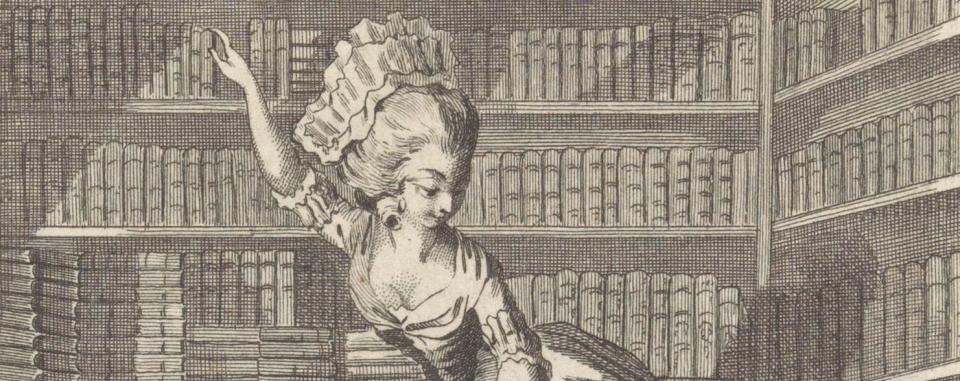
The Women and the Household in the Early Modern Book Trade Conference 2025 is organised by the Museum Plantin-Moretus, University of Antwerp, KU Leuven, Utrecht University, and Northumbria University as part of the FWO research project ‘Partners in Innovation. Women Publishers as Knowledgeable Agents in the Low Countries’ Book Trade (1550-1750)’.
5 – 7 November 2025
The aim of this two-day conference is to share knowledge of women’s rich and varied lives and works in the period before the rapid industrialisation of book production which changed the face of home labour for early modern women.
Keynote speakers: Susan Broomhall (Australian Catholic University) and Alicia Montoya (Radboud University)
Call for Papers, deadline – 31 March 2025
The growing field of feminist bibliography has been built upon a recognition that early modern books were mostly products of the interwoven sectors of domesticity and trade. Many book trade practices took place within the home, enabling the unofficial training and labour of women and children. It was only the most successful enterprises that prompted investment in bespoke buildings, prompting a public-private dialectic which was sometimes merely superficial, since many were also managed or served by female family members and domestic servants. Some women owned businesses, premises and stock; managed apprentices and shops; and held ijaza (licenses) or copyright. Many others laboured invisibly, printing and sewing volumes, engraving blocks, and making ink and paper from home.
Traditionally understood as a male-dominated domain, pioneering research of the 1990s by, for example, Helen Smith, Paula McDowell, Susan Broomhall, Mark Lehmstedt, and Leslie Howsam enabled us to reconsider the place of women in the book trade in a much more systematic way. Since then, scholars such as Sarah Werner, Saskia Limbach, Heleen Wyffels, and Rémi Jimenes have developed the field, and Kate Ozment, Cait Coker, and Michelle Levy have provided new and valuable tools for feminist bibliography in The Women in Book History Bibliography and The Women’s Print History Project. And yet the work of recovering the history of women and their place in the book trade remains challenging and labour-intensive.
Historiography, record-keeping, and even the process of archiving have been androcentric, and the historical—and for the most part, printed—evidence that survives about women and book production predominantly concerns widows. Often, we need to look beyond the imprint and the advertisement to the material culture of book production, to the physical evidence of the codex and the personal records of journals and correspondence to identify female family members like daughters, sisters, and wives. With this turn to material cultural methodologies, the under-explored collections in museums and archives can provide a richer picture, one that is improving with new collections development practices and increased resources being allocated by heritage sites and major research libraries to women’s histories and to the recovery of marginalised figures in the History of the Book.
This conference, as a part of the FWO research project ‘Partners in Innovation. Women Publishers as Knowledgeable Agents in the Low Countries’ Book Trade (1550-1750)’, coincides with the year devoted to the many women living and working in the Officina Plantiniana in 2025 at Museum Plantin-Moretus, a UNESCO World Heritage Site, and is co-hosted with the Rubens House Museum, Antwerp. We invite participants to consider the supposed binary between home and work for women in the early modern book trade worldwide. Through this approach, we hope to share knowledge of women’s rich and varied lives and works in the period before the rapid industrialisation of book production which changed the face of home labour for early modern women. The event features a guided tour of Museum Plantin-Moretus and a show and tell of key artefacts from the collection.
Areas
We invite submissions for 20-minute papers addressing the following areas:
- Marriage and inheritance
- Networks, kinship, and patronage
- Representations of the household and women in the book trade
- Impact of women on the history of knowledge production
- Spatial and architectural perspectives
- Apprentices and apprenticing, formal and informal
- Reflections on methodologies for feminist recovery of women’s work in the book trade
- Transnational comparisons of home labour in the book trade
- Material cultural approaches to women’s book history
- Women’s work in all sectors of book production, including binding, paper making, etc.
Application
Please send an abstract of 200 words to womenandplantin@antwerpen.be. Make sure to include your name, affiliation, email address, and a short bio of no more than 50 words by 31 March 2025. There will be a registration fee for presenters. Queries are welcomed by the organising committee, below.
Organising Committee: Nina Geerdink (Utrecht University); Kristof Selleslach (Museum Plantin-Moretus); Lieke van Deinsen (KU Leuven); Zanna Van Loon (Museum Plantin-Moretus); Helen Williams (Northumbria University), Patricia Stoop (University of Antwerp), Pierre Delsaerdt (University of Antwerp).

Laat een reactie achter