
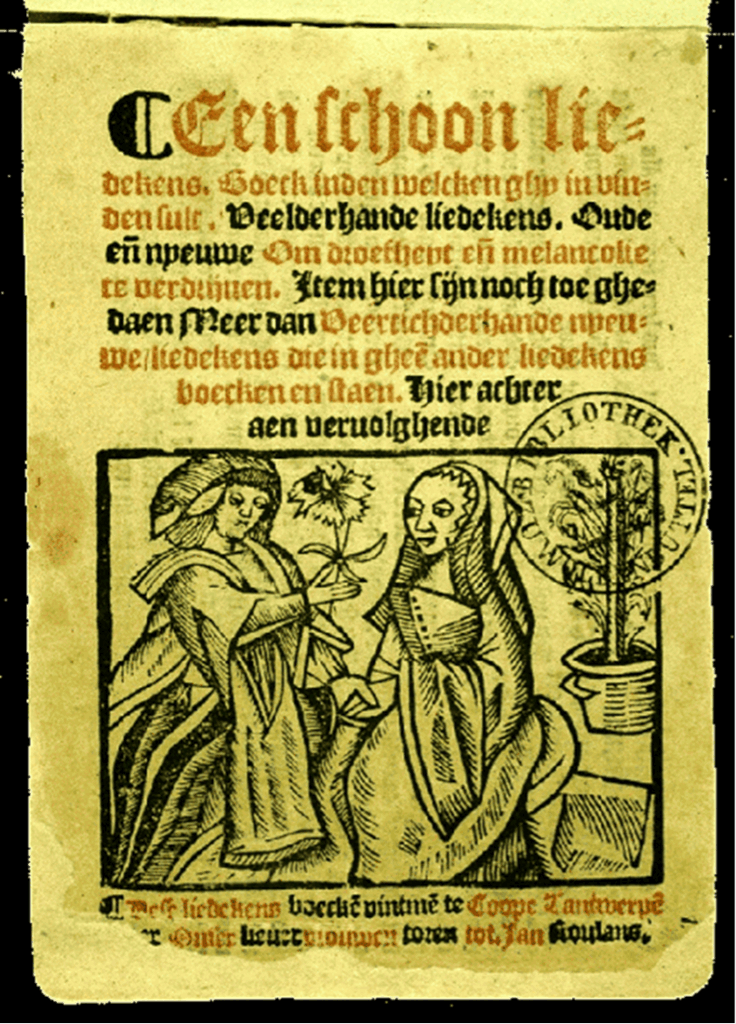
Interested in curiosity‑driven research and medieval literature? For the ERC project CONSENT, you will study the theme of sexual consent in medieval European narrative songs.
As a PhD candidate you will conduct an independent research project within the CONSENT team. CONSENT examines the theme of sexual consent in medieval European narrative song texts (c.1300-1550). The project aims to unveil a positive, consent-oriented part of late medieval culture, by investigating how song texts helped medieval people to explore positive scenarios for behaviour in sexual relationships and to discuss the importance of mutual consent.
In your project, you will investigate the theme of consent at the courts of the Rhine-Maas-Lorraine region (c. 1300-1430). This region was famous for its sociable song culture, in which no clear separation existed between performer and listener but in which the audience partook in every respect. The love songs stand out for often adding a touch of humour to the more serious themes of the courtly traditions of previous centuries. You will investigate the hypothesis that this sociable song culture gave way to new literary expressions of love and sexuality, which functioned as conversation starters or role-playing games. The list of manuscripts presented by Frank Willaert in 2021 will be your core corpus. In addition, you will explore in what respects the Rhine-Maas-Lorraine song culture was related to the other regions investigated by the CONSENT team, mapping European repertoire connections.
As a PhD candidate, you will conduct your research independently at the Radboud Institute for Culture & History (RICH) under the joint supervision of Prof. Johan Oosterman (thesis supervisor) and Dr Cécile de Morrée (PI of CONSENT). In addition to writing your PhD thesis, you will present your results in written publications and at in-person conferences, both in the Netherlands and abroad. As part of the Radboud Graduate School for the Humanities (GSH), you will also devote part of your time to training and academic services (approximately six months). Candidates are also expected to spend a small number of hours on teaching duties.
For more information about the PhD trajectory in general, please contact Suzanne van de Liefvoort. For questions about this particular research project, please contact Cécile de Morrée.
Would you like to learn more about what it’s like to pursue a PhD at Radboud University? Visit the page about working as a PhD candidate.

ja, graag geregeld info publikaties hierover