
• Door naar de hoofd inhoud
  • Skip to secondary menu
  • Spring naar de eerste sidebar
  • Spring naar de voettekst
Neerlandistiek. Online tijdschrift voor taal- en letterkunde

Neerlandistiek

Online tijdschrift voor taal- en letterkundig onderzoek

  • Over Neerlandistiek
  • Contact
  • Homepage
  • Categorie
    • Neerlandistiek voor de klas
    • Vertelcultuur
    • Naamkunde
  • E-books
  • Neerlandistische weblogs
  • Archief
    • 10 jaar taalcanon
    • 100 jaar Willem Frederik Hermans
  • Jong Neerlandistiek
  • Frisistyk
  • Mondiaal

Dutch in the Land of our Fathers

28 mei 2018 door Redactie Neerlandistiek Reageer

Door Christopher Joby
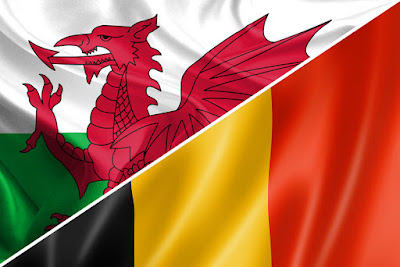
The Principality of Wales in Great Britain is not the first place one would look for traces of varieties of Dutch being spoken in history, but there are several reports which suggest that Flemish was spoken in the West of Wales from the twelfth century to the sixteenth century.

The sixteenth-century English historian, William Camden (1551-1623), wrote that King Henry I (1100-1135) had allowed Flemings to settle in Pembrokeshire. Some of them were probably related to Flemish mercenaries who had helped William the Conqueror to win the Battle of Hastings in 1066. When Camden visited Wales in the late sixteenth century he recorded that some people there spoke something close to English, which may be a variety of Flemish. The Ghent-born artist and poet, Lucas d’Heere, claimed that he spoke to people in Pembrokeshire who used ‘good Flemish’ (goed vlaemsch), although it has to be said that his variety of Flemish would have been somewhat different from the variety which may have been spoken in Pembrokeshire. If these reports are true then they add another chapter in the history of Dutch around the world.

Further reading: Christopher Joby, The Dutch Language in Britain (1550-1702): A Social History. Leiden: Brill, 2015, pp. 376-378.
L. Toorians, ‘Wizo Flandrensis and the Flemish Settlement in Pembrokeshire,’ Cambridge Celtic Medieval Studies, 20 (1990), pp. 99-118.

Dit stukje verscheen eerder op Christopher Joby’s nieuwe blog The History of Dutch

Delen:

  • Afdrukken (Opent in een nieuw venster) Print
  • E-mail een link naar een vriend (Opent in een nieuw venster) E-mail
  • Share op Facebook (Opent in een nieuw venster) Facebook
  • Delen op WhatsApp (Opent in een nieuw venster) WhatsApp
  • Delen op Telegram (Opent in een nieuw venster) Telegram
  • Delen op LinkedIn (Opent in een nieuw venster) LinkedIn

Vind ik leuk:

Vind-ik-leuk Aan het laden...

Gerelateerd

Categorie: Artikel Tags: extra muros, Groot-Brittanie, taalgeschiedenis, Wales

Lees Interacties

Laat een reactie achterReactie annuleren

Deze site gebruikt Akismet om spam te verminderen. Bekijk hoe je reactie gegevens worden verwerkt.

Primaire Sidebar

Gedicht van de dag

Jan van der Noot • Sonnet

“Gelukkig is die een vat zo vol eren,
Wijsheid, verstand en deugd aanschouwen mag,
Maar zalig hij, die heur nog trouwen mag.’

➔ Lees meer

Bekijk alle gedichten

  • Facebook
  • YouTube

Chris van Geel

Waar hij ook aanspoelt
de zee trekt een lip.

Bron: Het Zinrijk, 1971

➔ Bekijk hier alle citaten

Agenda

24 maart 2026: Inauguration de la Chaire Isabelle de Charrière

24 maart 2026: Inauguration de la Chaire Isabelle de Charrière

13 maart 2026

➔ Lees meer
15 maart 2026: Documentaire The World Behind Words

15 maart 2026: Documentaire The World Behind Words

13 maart 2026

➔ Lees meer
17 april 2026: Tiele-dag ‘Van middeleeuwers tot millennials’

17 april 2026: Tiele-dag ‘Van middeleeuwers tot millennials’

11 maart 2026

➔ Lees meer
➔ Bekijk alle agendapunten

Neerlandici vandaag

Geen neerlandici geboren of gestorven

➔ Neerlandicikalender

Media

Hoe leer je het beste een taal?

Hoe leer je het beste een taal?

14 maart 2026 Door Redactie Neerlandistiek Reageer

➔ Lees meer
15 maart 2026: Documentaire The World Behind Words

15 maart 2026: Documentaire The World Behind Words

13 maart 2026 Door Redactie Neerlandistiek Reageer

➔ Lees meer
Taaldinge

Taaldinge

13 maart 2026 Door Redactie Neerlandistiek Reageer

➔ Lees meer
➔ Bekijk alle video’s en podcasts

Footer

Elektronisch tijdschrift voor de Nederlandse taal en cultuur sinds 1992.

ISSN 0929-6514
Bijdragen zijn welkom op
redactie@neerlandistiek.nl
  • Homepage
  • E-books
  • Neerlandistische weblogs
  • Over Neerlandistiek
  • De archieven
  • Gebruiksvoorwaarden
  • Privacy­verklaring
  • Contact
  • Facebook
  • YouTube

Inschrijven voor de Dagpost

Controleer je inbox of spammap om je abonnement te bevestigen.

Copyright © 2026 · Magazine Pro on Genesis Framework · WordPress · Log in

  • Homepage
  • Categorie
    • Voor de klas
    • Vertelcultuur
    • Naamkunde
  • Archief
    • 10 jaar taalcanon
    • 100 jaar Willem Frederik Hermans
  • E-books
  • Neerlandistische weblogs
  • Jong Neerlandistiek
  • Frisistyk
  • Mondiaal Neerlandistiek
  • Over Neerlandistiek
  • Contact
%d