
Persbericht Amsterdam Typography
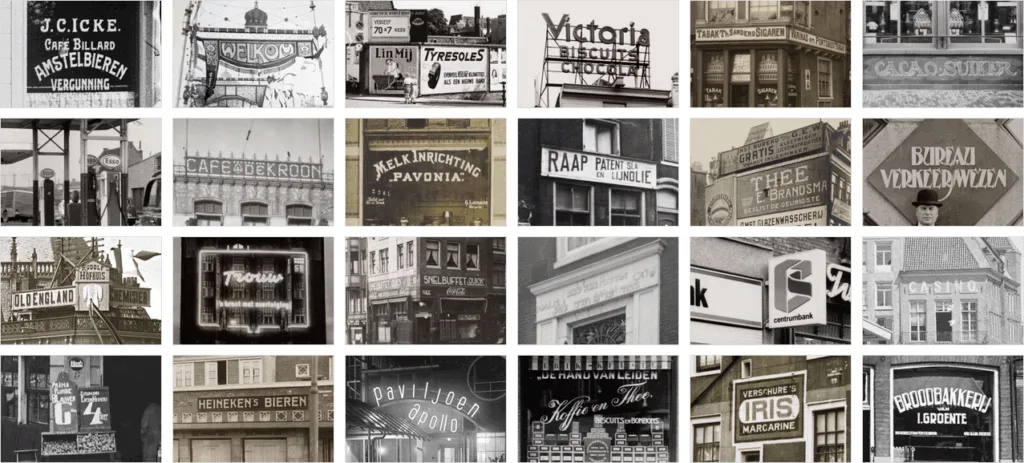
Amsterdam Typography has published a new collection of 1500 historical photos with typography from Amsterdam. On www.amsterdamtypography.nl/archive, visitors can view a random selection of 24 photos or explore all photos through an interactive map. The photos give an impression of the city’s rich history through the lens of typography.
In 2019, Arno Verweij started the project Amsterdam Typography, documenting typography in public space in Amsterdam and publishing a new photo online every day. In 2025, the city of Amsterdam celebrated its 750th anniversary, which was the reason to look back and collect historical photos with typography that is lost to time and could no longer be photographed.
This historical typography collection was made possible by the digital image bank of the Amsterdam City Archives, practical support from the city archives’ staf, and additional permission from the heirs of some of the photographers. The plan is to further expand the collection over time with photos from multiple sources.

Menig neerlandicus zal zich afvragen waarom dit tekstje in Neerlandistiek niet in het Nederlands kan worden afgedrukt. Eén troost: de Engelse taal inspireert tot de slagzin Your choice is Verschure’s Iris margarine.
Vroeger kon René Appel nog een verklaring vinden voor het gebruik van een nabijgelegen taal: dat werkte statusverhogend. Bijvoorbeeld jongeren uit Weesp die het Jordanees overnemen: Kaak nou es!
Vandaag de dag moet je rekening houden met bewuste beïnvloeding door NGO’s die op kosten van de EU het narratief van de globalisering uitdragen. Lach maar. Maar in het hoger onderwijs is het Engels opgerukt omdat buitenlandse studenten het verleidelijke dan wel perverse voordeel van een dubbele bekostiging hebben. Taal en politiek kom je overal tegen in de wereld.
Neerlandistiek is niet per se een eentalig tijdschrift, wij plaatsen stukken in alle talen die we lezen kunnen. In dit geval kwam het persbericht in het Engels. Waarom zou die in het Engels zijn? De verklaring ervoor lijkt me niet heel ingewikkeld: zo’n tentoonstelling is ook interessant voor toeristen die het Nederlands niet per se machtig zijn. Het is een redelijke gok dat zulke toeristen het Engels voldoende machtig zijn om dit te kunnen begrijpen, en datzelfde geldt voor Nederlandse geïnteresseerden. Daar zit niets ingewikkelds bij over status of over ‘bewuste beïnvloeding door NGO’s’.