
For an edited volume edited by Christopher Joby and Nicoline van der Sijs
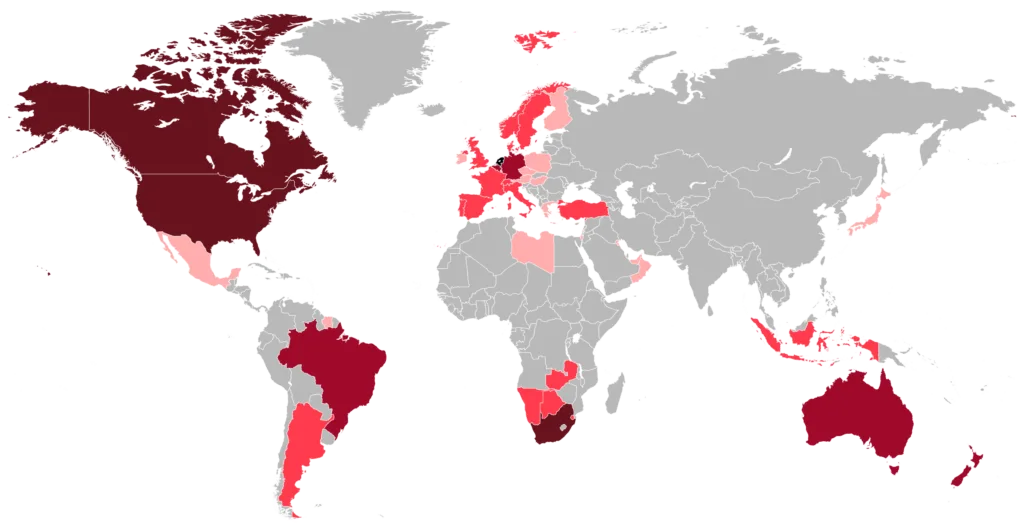
In July 2025, a new edited volume, Dutch and Contact Linguistics, was published by John Benjamins in the series IMPACT: Studies in Language, Culture and Society Series. This volume has already garnered positive comments. Therefore, the editors are now planning to produce a follow-up volume. Like the first volume, the central question that the proposed new volume attempts to answer is in what contexts the Dutch language has had contact with other languages outside the Dutch language area and what the consequences of this contact have been. Since it emerged as a continuum of nederduytsch dialects in the first millennium CE, the Dutch language has been in contact with many languages outside the Low Countries. People from the Low Countries as varied as merchants, soldiers, artisans, religious exiles, missionaries, and drainage workers have been vectors of the Dutch language, often establishing Dutch language communities inside and outside Europe, bringing the Dutch language into contact with many other languages belonging to an extensive range of language families.
Amongst the topics that contact linguistics examines are multilingualism, codeswitching, lexical borrowing, grammatical interference, translation practices, the emergence of contact varieties such as creoles and pidgins, and language shift or ‘first-language attrition’. The proposed volume intends to include chapters on all these themes. Furthermore, it will take a diachronic view of contact between Dutch and other languages with contributions analyzing this subject over the last thousand years or so. Additionally, it aims to examine contact globally to showcase the geographical reach of the Dutch language.
For this volume, we invite Dutch linguists, historical sociolinguists, and contact linguists to submit chapters especially on the following topics:
- How Dutch has functioned in multilingual environments;
- Language contact resulting from migration in the Middle Ages, such as Flemish migration to England, Scotland and Wales;
- The emergence of pidgins and creoles resulting from Dutch global commercial expansion;
- Code-switching and gap-filling in Dutch texts written outside the Dutch language area;
- Loanword integration with an analysis of phonemic substitution, above all from languages with sound systems that differ significantly from the Dutch sound system;
- Grammatical interference in languages with which Dutch has had contact;
- Language shift to languages other than English because of migration in the twentieth and twenty-first centuries, for example, to South America;
- Linguistic aspects of translating into and out of Dutch;
- The factors that have influenced the speed and scale of language shift from Dutch as an L1, e.g., language policy and technology;
- Problematizing the study of contact phenomena arising from contact between Dutch and other Germanic languages: how we can work out the source of loanwords in multilingual situations (such as Japan or Scandinavian language environments), as Dutch, German, Low German, Frisian and English have many words in common;
- How contact linguistics helps to explain the emergence of Afrikaans;
- Dutch as a heritage language;
- The contribution of texts compiled by missionary linguists to our understanding of contact between Dutch and other languages;
- The circulation of loanwords – how words are borrowed from Dutch and then re-borrowed by other languages;
- The role of the internet and digitalization in the collection and analysis of data on contact between Dutch and other languages.
Please submit a one-page abstract (ca. 300 words) and a short biography (one paragraph) to Dr. Christopher Joby at c.joby@uea.ac.uk, before March 1st, 2026.
Applicants will be notified before the end of March, 2026. Chapters will be due by March 31st, 2027.

Laat een reactie achter