
• Door naar de hoofd inhoud
  • Skip to secondary menu
  • Spring naar de eerste sidebar
  • Spring naar de voettekst
Neerlandistiek. Online tijdschrift voor taal- en letterkunde

Neerlandistiek

Online tijdschrift voor taal- en letterkundig onderzoek

  • Over Neerlandistiek
  • Contact
  • Homepage
  • Categorie
    • Neerlandistiek voor de klas
    • Vertelcultuur
    • Naamkunde
  • E-books
  • Neerlandistische weblogs
  • Archief
    • 10 jaar taalcanon
    • 100 jaar Willem Frederik Hermans
    • Chris van Geel
  • Jong Neerlandistiek
  • Frisistyk
  • Mondiaal

Gerbrand Adriaensz. Bredero’s Spaanschen Brabander: An English Appreciation

11 augustus 2018 door Redactie Neerlandistiek Reageer

Door Nigel Smith

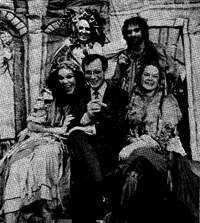
David H. Brumble tussen Jerolimo, Robbeknol en de twee snollen.
Door Dan Bartow 1982-1983.

English readers and playgoers should take Bredero most seriously, for he is more perceptive and more brilliantly entertaining than nearly all of his English contemporaries, and in his plays he often reveals himself to be the equal of Shakespeare and Ben Jonson. I’ll confine my comments to the Spaanschen Brabander (1617), the one Bredero play that has been translated into English, by David H. Brumble. It is based on the Spanish picaresque fiction Lazarillo de Tormes (1554), and concerns a bankrupt merchant from Antwerp, Jerolimo, who tries to flourish in burgeoning Amsterdam, only to find himself forced to flee with further ignominy.

Bredero’s highly accurate and diverse description of Amsterdam life in 1580, when the action is set, shows monetary gain winning over moral and distributive justice. This is not the world of early modern courtly virtue, which is mocked throughout his play, but an open embrace of the different dialects and accents that populated the city, revealing the drives of so many different people, the majority of whom were immigrants from somewhere else for the sake of safety and to flourish. The Spaanschen Brabander is the play about migration, and Bredero is early modern migration’s most perceptive analyst.

The sum total of lived experience that follows is a calculus of economic exploitation and cheating, the way of the city and a cumulative apocalypse for the audience, even as we are, I believe, meant to be delighted and entertained. The play offers in its action and speeches so many Dutch city life portraits, each of which might be given its own canvas, but that build into a tremendous rhythm of gain by deprivation. There is no adjustment of the moral order as there is in the conclusion of a Shakespeare comedy, or a perceived threat from excessive exchange to the system of justice and order, as there is in a Ben Jonson play, but instead a demonstration that the order is as it is because that is how the movement of people and commodities, how migration, has made the life of Amsterdam happen. After migration comes hybridity, since Bredero also discusses (if inconclusively) interracial sex and mixed breeding. Moreover, as a trained painter, Bredero delivered a visual precision in his language that reached further into economic reality: Dutch dominance in the international art market, even if Amsterdam had in 1617 yet to reach the peak of its influence and achievement in painting.
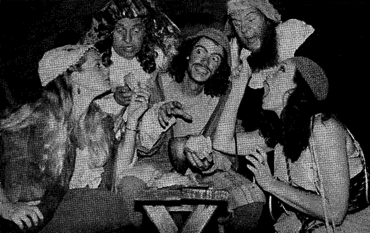
V.l.n.r. Trijn Jans (Libby Villari), Jerolimo (Richard Harris), Krelis (David Yeakle), Floris Harmensz. (Gene Woods), Bleeke An (Roxanna Rogers). Door Dan Bartow 1982-1983.

In the year when we celebrate Bredero’s works by commemorating his early and untimely death, let it be a cause for the translation into English of more of his exquisite, life-affirming plays, poems and songs.

Images: Dan Bartow 1982-1983 via: DBNL

Dit bericht verscheen eerder op Bredero 2018.

Delen:

  • Afdrukken (Opent in een nieuw venster) Print
  • E-mail een link naar een vriend (Opent in een nieuw venster) E-mail
  • Share op Facebook (Opent in een nieuw venster) Facebook
  • Delen op WhatsApp (Opent in een nieuw venster) WhatsApp
  • Delen op Telegram (Opent in een nieuw venster) Telegram
  • Delen op LinkedIn (Opent in een nieuw venster) LinkedIn

Vind ik leuk:

Vind-ik-leuk Aan het laden...

Gerelateerd

Categorie: Artikel Tags: 17e eeuw, Bredero, Bredero-jaar

Lees Interacties

Laat een reactie achterReactie annuleren

Deze site gebruikt Akismet om spam te verminderen. Bekijk hoe je reactie gegevens worden verwerkt.

Primaire Sidebar

Gedicht van de dag

Alfred Kossmann • Feestdag

De kinderen bliezen kartonnen trompetten
(Wie een toeter heeft op een feestdag moet
Aan één stuk toeteren – geen mens kan ’t beletten –
Tot hij gaar in het hoofd wordt en raar ter been)

➔ Lees meer

Bekijk alle gedichten

  • Facebook
  • YouTube

Vlaggetjes

Met een snotneus
kun je geen bier halen

Bron: Joost Broere

➔ Bekijk hier alle citaten

Agenda

8 mei 2026: Symposium Onsterfelijke dood

8 mei 2026: Symposium Onsterfelijke dood

26 april 2026

➔ Lees meer
30 april 2026: Kampliteratuur van Charlotte Delbo

30 april 2026: Kampliteratuur van Charlotte Delbo

25 april 2026

➔ Lees meer
16 mei 2026: Hommage In de Knipscheer

16 mei 2026: Hommage In de Knipscheer

22 april 2026

➔ Lees meer
➔ Bekijk alle agendapunten

Neerlandici vandaag

geboortedag
1936 Wam de Moor
1940 Wim Hazeu
➔ Neerlandicikalender

Media

Sanneke van Hassel en Bert Paasman over Elisabeth Maria Post

Sanneke van Hassel en Bert Paasman over Elisabeth Maria Post

26 april 2026 Door Redactie Neerlandistiek Reageer

➔ Lees meer
In gesprek met literaire duizendpoot Jonathan Van Der Horst

In gesprek met literaire duizendpoot Jonathan Van Der Horst

22 april 2026 Door Redactie Neerlandistiek Reageer

➔ Lees meer
The perks of literature – with Jeroen Dera

The perks of literature – with Jeroen Dera

22 april 2026 Door Redactie Neerlandistiek Reageer

➔ Lees meer
➔ Bekijk alle video’s en podcasts

Footer

Elektronisch tijdschrift voor de Nederlandse taal en cultuur sinds 1992.

ISSN 0929-6514
Bijdragen zijn welkom op
redactie@neerlandistiek.nl
  • Homepage
  • E-books
  • Neerlandistische weblogs
  • Over Neerlandistiek
  • De archieven
  • Gebruiksvoorwaarden
  • Privacy­verklaring
  • Contact
  • Facebook
  • YouTube

Inschrijven voor de Dagpost

Controleer je inbox of spammap om je abonnement te bevestigen.

Copyright © 2026 · Magazine Pro on Genesis Framework · WordPress · Log in

  • Homepage
  • Categorie
    • Voor de klas
    • Vertelcultuur
    • Naamkunde
  • Archief
    • 10 jaar taalcanon
    • 100 jaar Willem Frederik Hermans
  • E-books
  • Neerlandistische weblogs
  • Jong Neerlandistiek
  • Frisistyk
  • Mondiaal Neerlandistiek
  • Over Neerlandistiek
  • Contact
 

Reacties laden....
 

    %d