
• Door naar de hoofd inhoud
  • Skip to secondary menu
  • Spring naar de eerste sidebar
  • Spring naar de voettekst
Neerlandistiek. Online tijdschrift voor taal- en letterkunde

Neerlandistiek

Online tijdschrift voor taal- en letterkundig onderzoek

  • Over Neerlandistiek
  • Contact
  • Homepage
  • Categorie
    • Neerlandistiek voor de klas
    • Vertelcultuur
    • Naamkunde
  • E-books
  • Neerlandistische weblogs
  • Archief
    • 10 jaar taalcanon
    • 100 jaar Willem Frederik Hermans
  • Jong Neerlandistiek
  • Frisistyk
  • Mondiaal

Dutch in the Spice Islands

28 september 2018 door Redactie Neerlandistiek Reageer

Door Christopher Joby
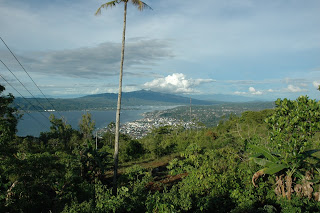
The Indonesian archipelago has a rich diversity of languages. Several varieties of Malay are spoken in the area including the official language of Indonesia, Bahasa Indonesia, and Manado Malay, spoken in Northern Sulawesi. Another variety is Ambon Malay, a Malay creole spoken on Ambon and surrounding islands collectively known as Maluku (the Moluccas) or the Spice Islands. Arab traders and Muslim missionaries brought Malay to the islands in the fourteenth century.

In the early sixteenth century, the Portuguese arrived bringing their language and Catholic religion with them. By the time that the Dutch arrived at the turn of the seventeenth century, there were two languages of wider communication in the islands, Malay and Portuguese. After ejecting the Portuguese in 1605 the Dutch East India Company (VOC) established a base at Ambon. They made two attempts to introduce their language to the local people. In 1607 they established a school and taught in Malay and Dutch. However, by 1615 it was clear that these attempts were making little headway, in part because local people found Dutch a difficult language. Another attempt to introduce Dutch was made in the 1620s, using Malay as the medium of instruction. However, these efforts too eventually foundered and in 1665 the VOC decided it would no longer promote the use of Dutch among the inhabitants of Maluku. Another reason why Dutch was not adopted by local people was that although the Dutch had managed to dislodge Portuguese as an LWC, they could not or did not do so with the other pre-existing LWC, Malay. Despite this, as Nicoline van der Sijs has written, as a result of the continued presence of the Dutch in the area, there are some 570 Dutch loanwords in Ambon Malay. Among these are ambtenaar (official), belasting (tax) and jaloers (jealous). Other varieties of Malay spoken in Maluku such as Ternate Malay and Bahasa Indonesia also have plenty of Dutch loanwords.

Further reading:

Nicoline van der Sijs, Nederlandse woorden wereldwijd. The Hague: SDU, 2010, pp. 47-48.
Kees Groeneboer, ‘The Dutch Language in Maluku’, Cakalele, Maluku Research Journal Majalah Penelitian Maluku, 5 (1994), pp. 1-10.
François Valentijn, Omstandig Verhaal van de Geschiedenissen en Zaaken het kerkelyke ofte den Godsdienst betreffende, zoo in Amboina, als in alle de Eylanden […] (Amsterdam: Joannes van Braam, 1726), pp. 2-44.

Dit stukje verscheen eerder op het blog The History of Dutch.

Delen:

  • Klik om af te drukken (Opent in een nieuw venster) Print
  • Klik om dit te e-mailen naar een vriend (Opent in een nieuw venster) E-mail
  • Klik om te delen op Facebook (Opent in een nieuw venster) Facebook
  • Klik om te delen op WhatsApp (Opent in een nieuw venster) WhatsApp
  • Klik om te delen op Telegram (Opent in een nieuw venster) Telegram
  • Klik om op LinkedIn te delen (Opent in een nieuw venster) LinkedIn

Vind ik leuk:

Vind-ik-leuk Aan het laden...

Gerelateerd

Categorie: Artikel Tags: taalgeschiedenis

Lees Interacties

Laat een reactie achterReactie annuleren

Deze site gebruikt Akismet om spam te verminderen. Bekijk hoe je reactie gegevens worden verwerkt.

Primaire Sidebar

Gedicht van de dag

Kees Jiskoot • Zwaarmoed en potsier

Maar aan Brusselse loketten
bezig ik hun zoet patois:
Jefke, Ickxske, Sjefke, Krieckxske,
Olland, Olland, Toetatwâ.

➔ Lees meer

Bekijk alle gedichten

  • Facebook
  • YouTube

Chris van Geel

SNOETJE

Een snoetje van ontroering, een snoetje van ontrouw.

Bron: Barbarber, september 1969

➔ Bekijk hier alle citaten

Agenda

6 februari 2026: Towards New Horizons of Scholarly Publishing

6 februari 2026: Towards New Horizons of Scholarly Publishing

17 december 2025

➔ Lees meer
28 december 2025: Zesde editie van Winterzinnen

28 december 2025: Zesde editie van Winterzinnen

16 december 2025

➔ Lees meer
14 januari – 6 maart 2026: Workshop Slimmer zoeken in Delpher

14 januari – 6 maart 2026: Workshop Slimmer zoeken in Delpher

10 december 2025

➔ Lees meer
➔ Bekijk alle agendapunten

Neerlandici vandaag

geboortedag
1901 Pierre Boyens
sterfdag
1891 Jan Beckering Vinckers
1933 Johan Kern
1951 Jacoba van Lessen
2024 Erik Brus
➔ Neerlandicikalender

Media

Het verdwenen botje van Sint-Werenfridus

Het verdwenen botje van Sint-Werenfridus

18 december 2025 Door Redactie Neerlandistiek 2 Reacties

➔ Lees meer
Elise Vos – Van alles de laatste

Elise Vos – Van alles de laatste

17 december 2025 Door Redactie Neerlandistiek Reageer

➔ Lees meer
Waar komt al die literatuur vandaan?

Waar komt al die literatuur vandaan?

16 december 2025 Door Redactie Neerlandistiek Reageer

➔ Lees meer
➔ Bekijk alle video’s en podcasts

Footer

Elektronisch tijdschrift voor de Nederlandse taal en cultuur sinds 1992.

ISSN 0929-6514
Bijdragen zijn welkom op
redactie@neerlandistiek.nl
  • Homepage
  • E-books
  • Neerlandistische weblogs
  • Over Neerlandistiek
  • De archieven
  • Contact
  • Facebook
  • YouTube

Inschrijven voor de Dagpost

Controleer je inbox of spammap om je abonnement te bevestigen.

Copyright © 2025 · Magazine Pro on Genesis Framework · WordPress · Log in

  • Homepage
  • Categorie
    • Voor de klas
    • Vertelcultuur
    • Naamkunde
  • Archief
    • 10 jaar taalcanon
    • 100 jaar Willem Frederik Hermans
  • E-books
  • Neerlandistische weblogs
  • Jong Neerlandistiek
  • Frisistyk
  • Mondiaal Neerlandistiek
  • Over Neerlandistiek
  • Contact
 

Reacties laden....
 

    %d