
Afrikaans is unique among the Germanic languages in several ways: Notably, it is the only language of the Germanic family that originated outside of Europe and that is spoken primarily in Africa. Due to the unique historical context in which Afrikaans developed, it has grammatical features setting it apart from the rest of the Germanic family. Afrikaans is also the first language of over seven million people and the third largest language in South Africa.
In spite of its uniqueness and the size of the Afrikaans speech community, Afrikaans is relatively understudied and underdescribed from the perspective of theoretical linguistics. This workshop seeks to address the paucity of descriptive and theoretical studies of Afrikaans in contemporary linguistics by bringing together scholars who work on any aspect of Afrikaans grammar.
We welcome contributions on any aspect of Afrikaans grammar, from both a descriptive and theoretical perspective. Also welcome are contributions of a more comparative nature, focusing on the relationship between Afrikaans and her sister languages (Dutch, Frisian, etc.), the role of language contact, and/or current grammatical variation. Possible topics include (but are not limited to):
- Phonetics (acoustic, articulatory, perceptual)
- Phonology
- Morphology
- Syntax
- Semantics
- Pragmatics
- History of Afrikaans
- Sociolinguistic of Afrikaans
- Dialectology and varieties of Afrikaans
- Comparative analyses of Afrikaans and her sister languages
To ensure that contributions to the workshop will be accessible to the widest possible audience, the language of the workshop will be English.
AGW
The first Afrikaans Grammar Workshop took place in Johannesburg in August 2016, the second one in Ghent (Belgium) in October 2018. The aim of the workshop is to bring together researchers from varying theoretical and methodological perspectives who concern themselves with the study of Afrikaans grammar. The workshop is organized in conjunction with the Virtual Institute for Afrikaans (VivA), the University of Michigan, and the Universiteit Gent.
Keynote speakers
- Jenny Audring (Leiden University), ‘The puzzle of Afrikaans pronominal gender’
- Andries Coetzee (University of Michigan), ‘The last vestiges of Patagonian Afrikaans: Linguistic practices of a disappearing Afrikaans-Spanish bilingual community’
- Daan Wissing (North-West University), ‘What’s the case with schwa? A conversation between Dutch and Afrikaans’
Presentation format
Presentations will be 20 minutes, with an additional 10 minutes of discussion.
Abstract format
We welcome abstracts on any topic related to the workshop topic. Abstracts should be anonymous and 1 or 2 pages long (A4 or letter, 12pt font), including examples, figures and references (if any). Anonymous abstracts in pdf format should be submitted to amsterdam@afrikaansegrammatica.nl no later than July 1, 2020.
Travel bursaries
A limited number of travel bursaries are being made available for suitable post-graduate students or early-career academics.
- Who qualifies? Local or international students who are currently registered in a master’s or PhD programme; academics who are employed as postdoctoral researchers; or academics who have earned a PhD in 2017 or 2018. Only candidates whose abstracts have been accepted for presentation at the workshop will be considered.
- What does the travel bursary cover? Only actual travel and accommodation costs will be covered. The amount of a travel bursary will be determined by how many applications have been received.
- When will I know whether my application was successful? As soon as possible after the programme has been finalised.
- What is the final date for application? 1 September, 2020
- How do I apply? You have to submit your abstract first. You can then complete the online application form (or navigate on VivA’s website to Portale > Inligtingsportaal > Afrikaans Grammar Workshop). You also have to register for the workshop.
For enquiries, contact Marlie Coetzee on +27 72 749 2431, or send an email to marlie@viva-afrikaans.org.
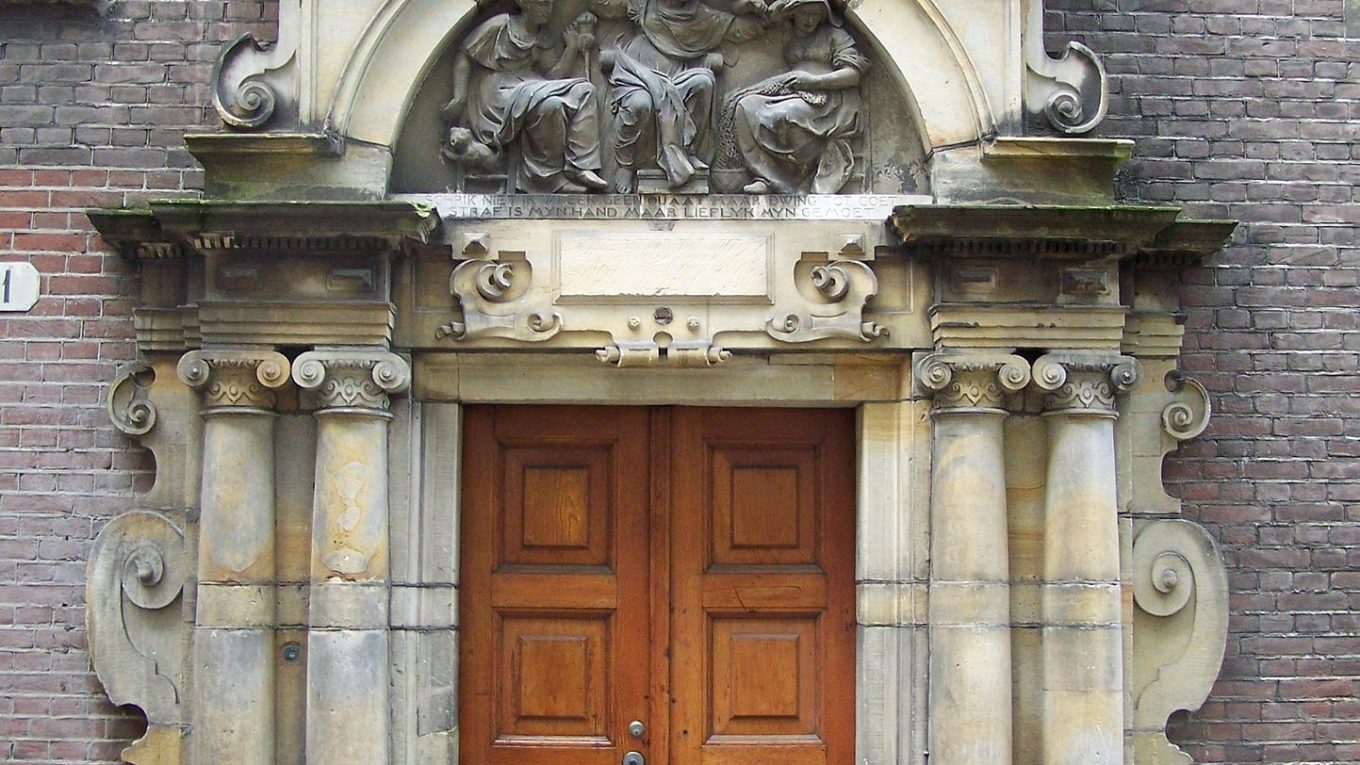
Afbeelding: Spinhuis, Amsterdam. Wikimedia

#/media/Bestand%3ASpinhuis_Poort_Hendrick_de_Keyser_Spinhuissteeg_Amsterdam.JPG)
Laat een reactie achter