
• Door naar de hoofd inhoud
  • Skip to secondary menu
  • Spring naar de eerste sidebar
  • Spring naar de voettekst
Neerlandistiek. Online tijdschrift voor taal- en letterkunde

Neerlandistiek

Online tijdschrift voor taal- en letterkundig onderzoek

  • Over Neerlandistiek
  • Contact
  • Homepage
  • Categorie
    • Neerlandistiek voor de klas
    • Vertelcultuur
    • Naamkunde
  • E-books
  • Neerlandistische weblogs
  • Archief
    • 10 jaar taalcanon
    • 100 jaar Willem Frederik Hermans
  • Jong Neerlandistiek
  • Frisistyk
  • Mondiaal

CFP: Literature without Frontiers?

31 maart 2017 door Redactie Neerlandistiek Reageer

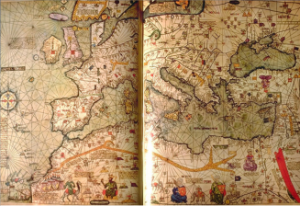
Next year (9-10 February, 2018) a conference will be organised at Ghent University  about perspectives for a transnational literary history of the Low Countries. This conference – Literature without Frontiers? – aims to bring together a number of telling examples that advocate a transnational perspective for the construction and writing of the literary history (histories?) of the Low Countries in the period 1200-1800. We invite scholars of the periods involved to address case studies (authors, texts, translations, mechanisms of textual production, motifs, tropes, genres) that on account of their ‘transnational’ character have fallen outside the scope of the current attempts of literary historiography.

Traditional literary historiography is rooted in the nineteenth-century construction of national literatures based on the political desire to demarcate national states and their corresponding linguistic identities from each other. For the study of the literature that predates the nineteenth-century nation-state the taxonomy of literary phenomena on the basis of geographical frontiers that were in most cases non-existent at the time, is a highly artificial though very common practice. The organizers of the conference Literature without Frontiers? believe that the study of literature in this long period is better served by a transnational perspective, if only because of the transnational character of its functioning. On account of their limiting focus, nationally oriented literary histories of the periods in question cannot but undervalue the actual cultural processes at work both in the international ‘Republic of Letters’ as well as in the language regions that exceed the borders of the current nation states.

Keynote speakers: Frans Blom (University of Amsterdam) and David Wallace (University of Pennsylvania)

Proposals for a thirty-minute presentation are expected by June 1st, 2017. For more details, see the CFP Literature without Frontiers.
Delen:

  • Klik om af te drukken (Opent in een nieuw venster) Print
  • Klik om dit te e-mailen naar een vriend (Opent in een nieuw venster) E-mail
  • Klik om te delen op Facebook (Opent in een nieuw venster) Facebook
  • Klik om te delen op WhatsApp (Opent in een nieuw venster) WhatsApp
  • Klik om te delen op Telegram (Opent in een nieuw venster) Telegram
  • Klik om op LinkedIn te delen (Opent in een nieuw venster) LinkedIn

Vind ik leuk:

Vind-ik-leuk Aan het laden...

Gerelateerd

Categorie: Artikel Tags: 16e eeuw, 17e eeuw, 18e eeuw, 19e eeuw, cultuurgeschiedenis, literatuurgeschiedenis, Vlaams-Nederlands

Lees Interacties

Laat een reactie achterReactie annuleren

Deze site gebruikt Akismet om spam te verminderen. Bekijk hoe je reactie gegevens worden verwerkt.

Primaire Sidebar

Gedicht van de dag

Johan van Heemskerck • Liedeke

Terwijl uw oog nog somtijds vriendelijk stond,
En ik een kus mocht krijgen van uw mond,
Was niemand zo gelukkig hier in ’t land,
Als ik mij zelve vand.

➔ Lees meer

Bekijk alle gedichten

  • Facebook
  • YouTube

Chris van Geel

TWEEËRLEI LINNEN

Ik ben veel liever een
bevroren laken buiten
dan een beschilderd doek
warm aan de wand onthaald.

Bron: Hollands Maandblad, maart 1969

➔ Bekijk hier alle citaten

Agenda

7 maart 2026: Themadag Standaardnederlands

7 maart 2026: Themadag Standaardnederlands

1 februari 2026

➔ Lees meer
11 maart 2026: ‘Tussen oorlog en cultuur. Ede, 1600-1800’ 

11 maart 2026: ‘Tussen oorlog en cultuur. Ede, 1600-1800’ 

31 januari 2026

➔ Lees meer
13 februari 2026: Proefcollege Nederlandse Taal en Cultuur

13 februari 2026: Proefcollege Nederlandse Taal en Cultuur

28 januari 2026

➔ Lees meer
➔ Bekijk alle agendapunten

Neerlandici vandaag

geboortedag
1929 Piet Verkuyl
1944 Bas Hesselink
sterfdag
1904 Paul Alberdingk Thijm
➔ Neerlandicikalender

Media

Waar komen spreekwoorden vandaan?

Waar komen spreekwoorden vandaan?

1 februari 2026 Door Redactie Neerlandistiek Reageer

➔ Lees meer
Maud Vanhauwaert en Nina Geerdink over Johanna Hobius

Maud Vanhauwaert en Nina Geerdink over Johanna Hobius

31 januari 2026 Door Fleur Speet Reageer

➔ Lees meer
In gesprek met auteur Daan Heerma van Voss

In gesprek met auteur Daan Heerma van Voss

29 januari 2026 Door Redactie Neerlandistiek Reageer

➔ Lees meer
➔ Bekijk alle video’s en podcasts

Footer

Elektronisch tijdschrift voor de Nederlandse taal en cultuur sinds 1992.

ISSN 0929-6514
Bijdragen zijn welkom op
redactie@neerlandistiek.nl
  • Homepage
  • E-books
  • Neerlandistische weblogs
  • Over Neerlandistiek
  • De archieven
  • Contact
  • Facebook
  • YouTube

Inschrijven voor de Dagpost

Controleer je inbox of spammap om je abonnement te bevestigen.

Copyright © 2026 · Magazine Pro on Genesis Framework · WordPress · Log in

  • Homepage
  • Categorie
    • Voor de klas
    • Vertelcultuur
    • Naamkunde
  • Archief
    • 10 jaar taalcanon
    • 100 jaar Willem Frederik Hermans
  • E-books
  • Neerlandistische weblogs
  • Jong Neerlandistiek
  • Frisistyk
  • Mondiaal Neerlandistiek
  • Over Neerlandistiek
  • Contact
 

Reacties laden....
 

    %d